▾ Talk to Billy ▾
press enter · Billy's answer fills the field below


Hi — I'm Billy. For two decades I've been telling the stories and building the systems that turn strangers into customers and customers into fans.
At Amazon across four roles and nearly a decade, I helped launch Amazon Music, founded the content strategy discipline within Devices & Services, designed the storytelling systems to help brands expand globally, and then returned to Music to lead creative for a growth team behind the most successful campaign of 2024. Before that: Ticketmaster, Fuse TV, SPIN, and Rolling Stone.
In 2025, I stepped away to go deep on AI — completing three MIT certificates in generative AI, agentic AI, and AI product and services design. I'm building the future of digital experience, and having a ton of fun doing it.
Full Story →Open to senior leadership roles in content strategy, creative direction, and AI-powered content systems.
Building a streaming service's creative voice from zero, then returning a decade later to lead content strategy for the next chapter of growth.
Amazon launched its audio streaming product, Prime Music, in 2014 — and at the time, the team was fewer than 40 people building an entirely new engagement layer on top of what had always been a purely transactional music experience. I joined six months before launch as the multi-disciplinary content lead, responsible for social media, editorial, brand voice, UX, and marketing content across every channel.
I built Amazon Music's social presence from near zero — launching and growing channels across Facebook, Twitter, Instagram, Tumblr, and Snap, ultimately growing our following to 3M+ and driving engagement 30x over three years.
I launched Amazon Music Front Row, an intimate acoustic and interview series filmed at Amazon's Seattle studio, featuring artists including Jason Isbell, Brandi Carlile, and Sam Smith. I programmed and marketed Prime Picks, a weekly-updated playlist tied to breaking music news that drove over 20M product engagements across nearly three years. And when Alexa launched in 2014, I moved immediately — developing Amazon Music's first original Alexa content, including "Song of the Day" and "Today in Music," driving tens of thousands of early voice engagements before the category had a playbook.
The result: a content-driven product experience that transformed Amazon Music from a download store into an engagement platform — reaching tens of millions of customers and helping establish the habits that fueled subscriber growth for years.
Amazon Music's primary growth funnels — bundled distribution through Prime and Alexa — were in steep decline. The business needed entirely new acquisition channels, and fast. I returned to Amazon Music in 2023 as part of the Audience Development Marketing leadership team, one of three L6s working alongside a team of 7–9 campaign managers, to build those new funnels through content-led growth marketing.
I owned creative content strategy across cross-channel campaigns — producing and sourcing short-form video and static assets for paid spends across YouTube, TikTok, Meta, Reddit, and O&O — and contributed to the strategic framework that defined how content, paid media, and product experience worked together as a unified growth engine.
The campaigns I contributed to spanned the full breadth of Amazon Music's 2023–2024 content slate. On the product side, I contributed content strategy and campaign creative for Maestro — the streaming industry's first AI-powered playlist generator and Amazon Entertainment's first consumer-facing AI product, which launched in public beta before scaling to 100% of Amazon Music customers, earning 50+ media placements across Billboard, TechCrunch, The Verge, and Engadget. On the live side, I worked on content strategy, campaign creative, and GTM coordination across Amazon Music's livestream portfolio — securing placements across homepage, push messaging, ASO, and paid social for shows including Amazon Music Live x NFL x Prime Video, Kendrick Lamar's The Pop Out (one of the most watched music livestream events of the year), and Stagecoach. That livestream strategy contributed to +31% customer growth, +39% revenue growth, and a +3.7pt lift in brand favorability. For sports partnerships, the F1 x Alpine x Benson Boone campaign generated $6M in earned media value and 88M impressions, ranking Amazon Music as the #3 most recognized Alpine sponsor. Overtime Elite was our best-performing campaign of 2024, driving 900K new customer high-value actions.
As part of this team, the Audience Development model delivered: +306% YoY acquisition growth, 75% reduction in customer acquisition cost, 45% improvement in retention, and a +2.8pt lift in consideration among non-users. The strategy was adopted as the growth playbook across Amazon's Global Media & Entertainment organization — extending its principles from music to Prime Video, Audible, and beyond.
Founding the Content Strategy discipline within the Devices Brand Studio and leading narrative, voice, and GTM across 20+ product lines.
Amazon's Devices Brand Studio had a content problem: every product line — Alexa, Echo, Kindle, Ring, Fire TV, Astro, Luna, Halo — was telling its own story in isolation. There was no shared narrative, no cross-product voice, and no discipline at the briefing table accountable for how those stories traveled across the customer journey. I was hired as Creative Director, Content Strategy to fix that — and was later promoted to Global Head of Content Strategy, reporting to the Director of Brand.
I founded the Content Strategy discipline inside the Brand Studio, building a six-person team responsible for voice, tone, narrative, and GTM strategy across 20+ product lines — including two of the most sensitive communications in the org: sustainability and accessibility, both managed at SVP level.
My team co-owned the Product Marketing Guide — the master brief for every major launch — spanning global new-to-world and next-gen product launches including Alexa, Echo, Kindle, Ring, Fire TV, Luna, Astro, and Halo. We expanded the briefing process by 33%, inserting Content Strategy as the connective tissue between Brand Strategists, Product Marketers, and the customer journey data that told us where and how the story needed to land. Previously, briefs were written without that layer. Now they couldn't ship without it. These launches routinely involved hundreds of stakeholders.
Our strategies were shaped by deep auditing and competitive analysis, and outlined how the narrative would be expressed across every channel in the customer journey — product page, category page, educational page, Amazon.com homepage, email, social, PR, blog, broadcast, and marketing real estate from partners including Prime Student, Amazon Music, Prime Video, and Amazon Fashion. This required real-time analysis of customer journey data to ensure creative was driving acquisition, engagement, and conversion across the funnel.
The work spanned global launches for Alexa, Echo, Kindle, Ring, Fire TV, Luna, Astro, Halo, and the annual Better Together portfolio campaign — a multi-product narrative that previous teams had failed to deliver, and that VP and SVP leadership had been trying to land for years. We shipped it. By managing centralized editorial calendars and cross-product insights, we changed how Amazon Devices thought about storytelling at scale: away from the product detail page, toward integrated, omni-channel narratives. That shift became standard practice.
Owning content strategy, UX, and marketing for the USGS org, driving an 11% increase in sellers completing the global expansion process.
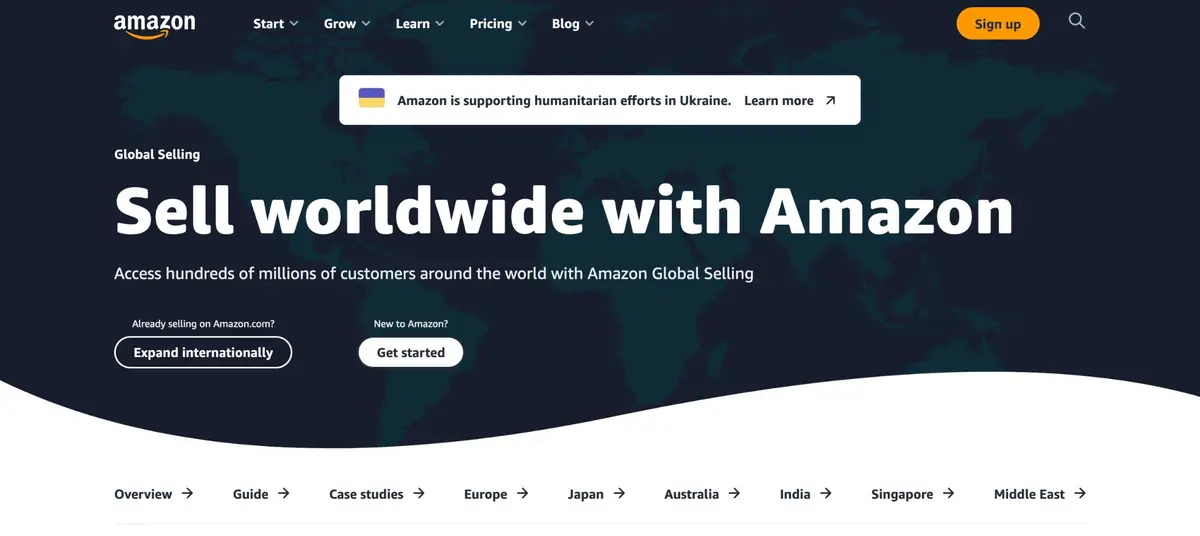
U.S. sellers wanting to expand to global Amazon markets faced a months-long, 78-step process fragmented across three separate platforms — Seller Central, Seller Dot, and Seller University — with conflicting, redundant, and often out-of-date guidance. The drop-off rate was significant. Sellers were starting the process and abandoning it halfway through. I joined the U.S. Global Selling org as Sr. Creative Director, Content & Strategy, owning messaging, UX, creative, and lifecycle marketing with one goal: make the expansion process completable.
I ran a full quant/qual audit across all three platforms — Seller Central, Seller Dot, and Seller University — surfacing every point of friction. Conflicting, redundant, and out-of-date messaging was everywhere.
I rebuilt the U.S.-to-EU expansion narrative from scratch — the EU is the largest market outside the U.S. and the most logical first step for global expansion. Working with Account Managers and Product Managers across all 11 sections of the process, I aligned on a master narrative: 54 steps, down from 78, with AI tools helping eliminate redundancy while preserving every legally required action.
I redesigned Seller Central around that revised framework, launched new landing pages to capture bottleneck data, and supported the rollout with a lifecycle email program, social, and O&O marketing. In five months, the redesigned experience drove an 11% increase in sellers completing the global expansion process.
Leading a rebrand and content strategy that drove a 23% increase in brand sentiment and 11% lift in last-minute ticket sales.
Ticketmaster is one of the most recognized — and most polarizing — brands in entertainment. After decades as the infrastructure of live events, the brand had become synonymous with fees, frustration, and friction. Leadership saw an opportunity to change that, driven by new products like Verified Fan that proved Ticketmaster could actually fight for fans. The brief: reposition the brand from transactional villain to advocate for the live experience. The scale: 400,000+ events annually, 500 million+ tickets processed, and a stakeholder ecosystem spanning professional sports leagues, venues, performers, and marketing partners — each with their own standards, guidelines, and expectations.
Reporting to the CMO, I joined as Creative Director managing a team of four, then was promoted to Head of Brand Creative & Content Strategy, co-managing an internal team of 15 alongside our embedded agency partner, Contend. I led the brand strategy work that framed all of it: the rebrand workshop, the new fan-centric positioning, and the content strategy that projected Live Only Happens Once across email, SEM, social, web and app UX, live events, and mass advertising.
Together, we built a content factory executing up to 800 assets per week — 31,000+ distinct assets in the first year, peaking at 3,200 per month. That system covered 107 sports teams, 110+ venues, and 5,000+ assets each for NFL, NHL, and NBA partnerships, with a framework nimble enough to pivot in real time based on performance data, event changes, and talent updates. Contend was embedded on-site, in our daily stand-ups, operating inside Ticketmaster's own project management infrastructure — a full integration model, not a vendor relationship.
The campaign drove a 24% increase in sales, a 23% lift in brand sentiment, and an 11% increase in last-minute ticket purchases — repositioning Ticketmaster from a brand fans tolerated to one they recognized as being on their side.
Building a new digital operation from the ground up and leading the redefinition of a major music TV network's voice across platforms.
Fuse TV had a reputation problem and a platform problem. After years as a Warped Tour-adjacent cable backwater, new owner Madison Square Garden Company had a bold vision: make Fuse a peer competitor to MTV. The network had broadcast reach and a music-TV legacy — but no digital operation, no defined voice, and no infrastructure for the multi-platform era it needed to compete in. I was recruited from SPIN to build it. Promoted quickly to Head of Digital / Editor in Chief, I owned the network's voice across broadcast, web, and social — leading an integrated strategy in daily collaboration with the broadcast studio's executive team.
I built the digital team from 2 to 17 in two years. I launched original branded-video franchises — attracting major sponsors including Sprite, Old Spice, and Doritos — developed editorial programming that aligned web and social with broadcast tentpoles, and built a YouTube strategy that drove over 3 million views per week, sustained. The result was a digital operation that matched the network's new ambitions: a coherent, cross-platform voice, a branded content business, and a content engine that proved Fuse could compete in music media on every screen.
From Editorial Assistant to Associate Editor, building SPIN's digital presence, social channels, and original video from the ground up.
SPIN was where the fundamentals were built. I joined as a freelance Editorial Assistant, Digital after my Rolling Stone internship, and spent the next five years learning to write, edit, manage, and eventually lead — all in the middle of print media's most disruptive decade. I owned daily editorial operations — writing and assigning news, managing editorial calendars, reviewing analytics, and developing the content strategy that drove traffic growth during SPIN's evolution into a broader cultural voice online.
I launched SPIN on Twitter, Facebook, and Instagram, and helped build the audience that carried the brand into the social era. As my role grew, I joined the tiger team that built two innovative digital products: SPIN Play — a native iPad app featuring song streams, video clips, daily music news, and cutting-edge journalism — and SPIN Earth, a global UGC platform aggregating concert content from fans around the world. Both represented early bets on what music media could become beyond the printed page.
Select reads: Q&A: Noel Gallagher Tells Stories About Solo LP · Feature: Chris Martin's Quiet Riot · My Favorite Things: Blink-182's Tom DeLonge · In Bed With Feist · Full writer's page →
I also led production of SPINHouse Live, our in-house acoustic series, and branded video work with major partners including Levi's, Vans, Ray-Ban, Ben Sherman, and MySpace. SPIN was the foundation. Editorial instincts. Platform thinking. Early audience strategy. Everything that followed was built on what I learned here.
Where it all started. A small-town music nerd lands an internship at the greatest rock magazine in the world — with a guitar-shaped application.
After years of reading each and every issue of Rolling Stone with great ceremony, then studying journalism in college — acting as the school paper's music editor and hosting a weekly radio show — I got the offer of a lifetime: an internship at Rolling Stone Magazine.
My creative application was a success: a guitar, called the "Goodman Intern-o-Matic 5000," that described my skills via the lingo of a guitar manual. I leapt at the opportunity and moved to NYC.
I started in summer 2005 as an editorial intern, and was soon picked up as a contract worker in the books department, where I worked on a collection of RS writing on Bob Dylan and worked alongside Hunter S. Thompson's assistant on a collection to celebrate the Gonzo genius.
Soon I was producing for the website and developing a relationship with the staff that would last a lifetime, as I continued to freelance for the website for years.
Leveraging sports partnerships across Formula 1, Overtime Elite, and the NFL to drive audience growth through paid social content strategy.
Situation · Task · Action · Result
Amazon Music was sitting on an underutilized growth lever. Prime Video had secured major sports rights — Thursday Night Football and Formula 1 broadcasts — giving Amazon direct access to massive, highly engaged sports audiences. Amazon Music had a presence inside those broadcasts, but wasn't converting that exposure into subscribers. The content existed. The paid social infrastructure existed. The connection between them was missing.
In July 2023, Amazon Music launched a partnership with the BWT Alpine F1 Team — becoming the first and only music DSP in Formula 1. F1 presented a unique opportunity: a global league with events across Amazon Music territories and an increasingly young fan base (62% of F1 fans are under 35, with 35% between 16–24), driven by the success of Netflix's Drive to Survive. The objective was to connect music and sports in an authentic way — reaching primed audiences to drive brand awareness and subscriber growth.
For each race, the team identified an artist with genuine interest in F1, traveled to the Grand Prix location, and produced bespoke content inside the BWT Alpine garage — drivers learning tire changes, hot laps, and behind-the-scenes moments that highlighted the intersection of music and sport fandom. All captured with a crew of 2–3 people within the strict production constraints of an F1 facility, which forced more creative, authentic content that outperformed traditional formats. Artists included Benson Boone (Mexico City), Lainey Wilson (Austin), Prince Royce (Las Vegas), Shenseea (Miami), NAV (Montreal), and Headie One (Silverstone). Content ran across paid and organic social on TikTok and Meta.
Over 18 months, the campaign produced content with 7 artists across 6 Grands Prix, secured brand placements at 9 races, and ran 3 growth marketing campaigns. Amazon Music earned $6M in Earned Media Value — 50% above the $4M target — generated 88M impressions against a 45.9M goal, and ranked as the 3rd most recognized Alpine sponsor across three separate brand surveys, while paying a fraction of the sponsorship fee of the other 20 partners. The campaign was entered in the 17th Annual Shorty Awards.
A tentpole campaign moment uniting Amazon Music Live Nashville performances, artist partnerships, and cross-channel content to drive country audience growth.
Situation · Task · Action · Result
Amazon Music's always-on paid social strategy was effective but diffuse — spread across genres, artists, and moments without a concentrated push behind any single one. Country was one of the platform's strongest audience segments, and October presented a natural concentration point: Country Music Month, with Amazon Music Live Nashville performances already scheduled featuring Garth Brooks, Lainey Wilson, and Chris Stapleton.
I was tasked with building the content strategy for the Country Music Month tentpole — identifying, sourcing, and curating the highest-performing assets from Nashville performances and coordinating with the external media agency on creative guidelines and placement strategy across TikTok and Meta.
I tracked and pulled the top-performing 0:15–0:30 cuts from Amazon Music Live Nashville concerts, working closely with the production teams to get access to the best moments as they happened. For the Garth Brooks performance at his Nashville bar — one of the campaign's signature moments — I ran the full content strategy, from the initial brief through the selection of video edits and stills used across paid and organic channels. The creative guidelines I built with the agency kept the content feeling authentic to country culture while optimizing for platform performance.
The Garth Brooks concert alone drove 2M+ viewers. Using exclusive content moments — Amazon Originals including songs from Garth Brooks and Lainey Wilson — we converted that viewership into growth, driving 400K high-value actions and new customers into the app experience. Country Music Month became the team's most successful tentpole campaign of the year, validating the concentrated genre-and-moment strategy as a repeatable playbook.
A UGC-driven brand campaign that captured the irreplaceable energy of live events, driving a 23% increase in brand sentiment across NFL, NHL, and music partnerships.
Situation · Task · Action · Result
Ticketmaster had a brand problem. Customers associated it with fees, frustration, and friction — not with the joy of live events. Yet Ticketmaster was the infrastructure behind some of the most culturally significant moments in sports and music. The brand was invisible at the good part and visible at the bad part. A rebrand was underway, and it needed a campaign that could shift perception at scale.
I was tasked with leading the creative strategy for the cornerstone brand campaign — something that could anchor the new fan-centric identity and run across TV, digital, and paid social. The insight had to be simple enough to work as a tagline and true enough to actually land.
"Live Only Happens Once." The insight was as direct as it gets: you can't replay a live event. The energy in the room, the crowd, the moment — it only exists once and then it's gone. I led the creative strategy working with agency partners to translate that into a campaign that leaned heavily into user-generated content — raw, authentic fan footage blended with polished production across NFL and NHL partnership spots. No stock. No actors playing fans. Real reactions, real arenas, real moments. The spots ran as paid media across TV, digital, and social, with the UGC approach giving the campaign a texture that advertising rarely achieves.
Working with Contend, an LA-based creative agency, LOHO drove a 23% increase in brand sentiment measured over the 2017–2020 campaign period — a significant and sustained shift for a brand with deeply entrenched negative associations. The campaign became the tentpole of Ticketmaster's rebranded identity and established the fan-first creative framework that governed the brand voice going forward.
Three MIT certificates. One SaaS prototype. One thesis: the same storytelling instincts that built brands at Amazon, Ticketmaster, and Rolling Stone are exactly what make AI products actually work.
In early 2025, I stepped away from Amazon after nearly a decade — two stints and four roles across Music, Devices & Services, and Global Brands. I'm proud of that chapter.
But I left because I saw what was already here (AI), and what was coming (AI accelerating itself).
I didn't want to manage AI from the sidelines. I wanted to secure the skills to build the future with it. So I enrolled in MIT Professional Education and completed three rigorous, three-month certificate programs back to back.
The foundation — prompt engineering, model behavior, retrieval-augmented generation, and the mechanics of how large language models actually work. Not the hype. The architecture. Understanding what these systems can and can't do changes how you use them.
Multi-agent systems, autonomous workflows, orchestration patterns. Building AI that doesn't just answer questions but takes sequences of actions across tools, APIs, and data sources. This is the layer where the real leverage lives — and where most people still aren't looking.
How do you build AI-powered products that people actually trust and use? Evaluation frameworks, responsible design, the gap between a working prototype and something that ships. This one shaped how I think about every product decision in Conductor.
Shout out to professors Abel Sanchez, Brian Subirana, and Andrew Lippman for making these courses challenging, practical, and genuinely transformative.
Somewhere in the middle of the coursework, the product idea crystallized.
I'd spent years at the intersection of music and technology. I kept watching independent artists gain more distribution power than ever — and still lose. Not because the music wasn't good. Because the infrastructure around the music — distribution, royalties, sync licensing, tour logistics, fan data, legal — was still controlled by the same institutions it always had been.
Labels don't own artists anymore. But artists still need what labels do.
Conductor is my answer to that. A SaaS platform that replicates every service a label provides and puts the artist in control. One dashboard. Real-time analytics. A voice AI booking agent. Sync licensing workflows. Fan engagement tools. The full stack — without the gatekeeping.
The challenge isn't technical. The challenge is trust. Independent artists have been burned by platforms that promised ownership and delivered dependency. Conductor has to earn trust before it earns a subscription. That's the design problem I'm most interested in solving.
The AI work is active and ongoing. Conductor continues to evolve. I'm exploring how AI-native content systems change the economics of creative leadership — and building the tools to prove it.
Open to senior roles where AI, storytelling, and scaled content systems intersect — and where the next decade of those systems is being built.
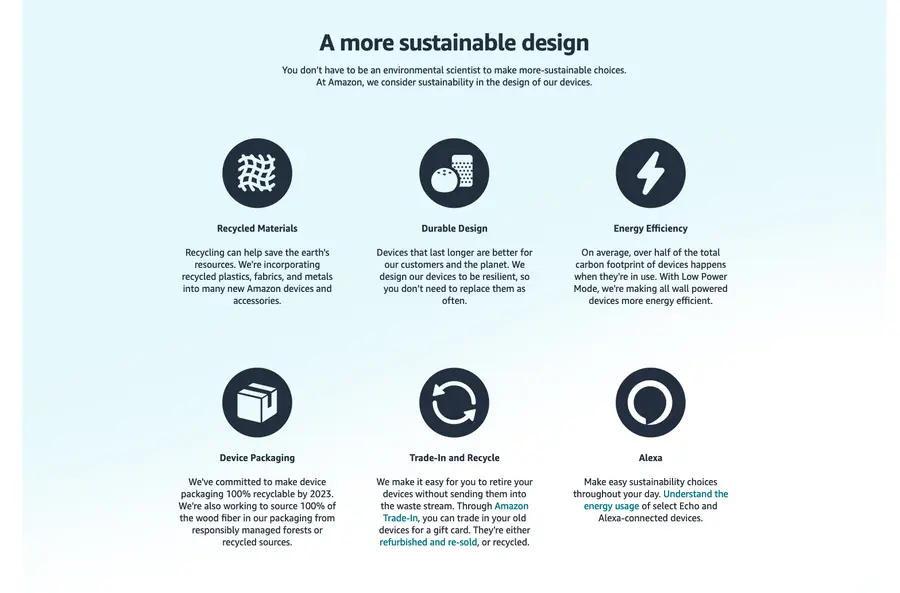
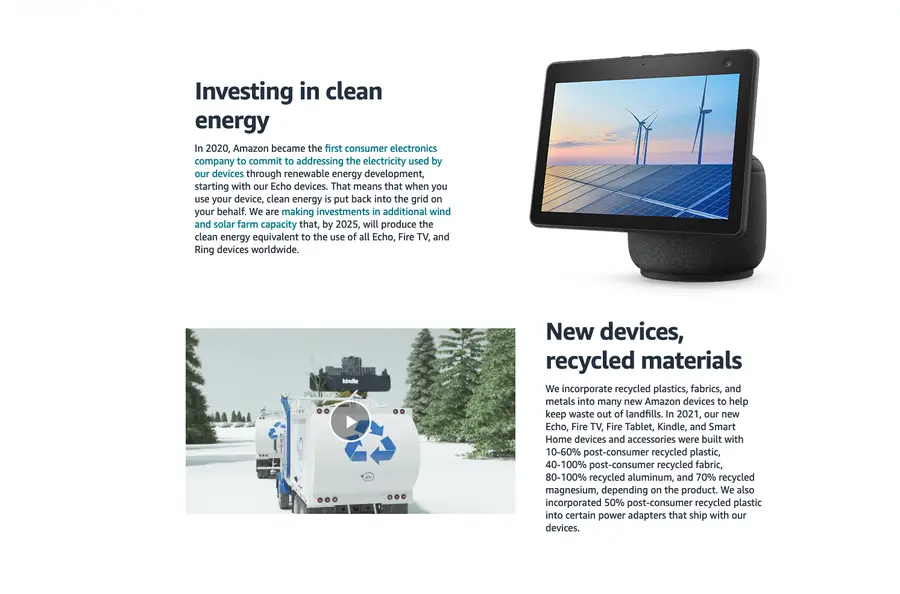
Let's Talk →Amazon's first customer-facing sustainability campaign — pitched from scratch, funded at $4.5M, and delivered 20M+ YouTube views and 6M+ landing page visits.
Situation · Task · Action · Result
Amazon had yet to release any sustainability narrative targeted at the average customer. What existed was a stockholder-facing page of legalese — dense, legal, and entirely disconnected from the people buying Alexa, Echo, and Ring. Earth Day was approaching. The opportunity to go big was sitting wide open.
I put together a pitch — an Amazon PRFAQ and a visual deck presentation — and brought it to leadership with a request for budget to make it real. The pitch was approved, and I was granted $4.5M to bring the campaign to life.
The core insight was simple: being sustainable doesn't have to be extreme. Whether it's tossing a bottle in the recycling bin, turning down the thermostat, or biking instead of driving — small choices add up. That insight sparked the idea for a bold, humorous spot that exaggerates the outsized impact a simple choice can have on the planet. We aligned on a humor register, wrote and tested multiple scripts, built mood boards, and went into a 3-day production shoot. The result was a 0:45 hero spot, a custom Earth Day landing page, and two original Alexa voice UX flows — "Alexa, let's get sustainable" and "Alexa, plant a tree" — that let customers take direct action through their devices.
20M+ views on YouTube. 6M+ landing page unique visits and 1M Alexa voice prompts. The campaign successfully reframed Amazon Devices as approachable and responsible, humanizing the sustainability story in a way no Amazon team had done before. It became the template for all future cross-product XPL work at Amazon Devices — directly leading to the $1.2M accessibility campaign that followed.


A $1.2MM campaign to connect Amazon Devices with the People With Disabilities community — 10 videos, five cohort-specific UX flows, and a full paid media blitz.
Situation · Task · Action · Result
Following the success of the sustainability XPL campaign, leadership recognized an even more urgent gap: Amazon Devices had never directly spoken to the People With Disabilities community, despite the fact that Alexa, Echo, and other devices offered features specifically designed to improve their lives. It was a missed connection — and a high-stakes one, requiring SVP-level sign-off on every word.
I was tasked with replicating the XPL model at a significantly larger scale, this time targeting five distinct PWD cohorts: vision, hearing, mobility, speech, and learning. The campaign needed to feel specific and human for each group — not a broad, generic nod to accessibility.
We developed a full campaign architecture: a 0:45 hero spot aimed at the entire PWD community, nine 0:15 cohort-specific clips, a new landing page with tailored UX flows for each cohort, and a $1.2M media buy spanning Amazon Display Ads, Prime Video and Freevee OTT, online video, paid social, and a full O&O blitz across Amazon's own channels. Pre-launch market testing validated the creative direction before a dollar was spent on media.
Ten videos produced. Five cohort-specific UX flows launched. Full paid media campaign executed across every major Amazon channel. The campaign drove 4M+ views across all videos and 5M+ visits to the landing page — and established the accessibility narrative as a permanent pillar of the Amazon Devices brand, proving that the XPL model built with sustainability could scale to the most sensitive communications in the org.
Alexa joined NASA's Artemis I mission as part of Callisto — a technology demonstration payload built with Amazon, Cisco, and Lockheed Martin. We told the story.
Situation · Task · Action · Result
In 2022, Amazon, Cisco, and Lockheed Martin partnered with NASA to embed Alexa aboard the Orion spacecraft as part of the Callisto technology demonstration payload — the first AI assistant sent to deep space, on the first mission of the Artemis program intended to return humans to the Moon. The story was extraordinary. The challenge was telling it without violating a confidential pre-launch embargo with NASA.
The Content Strategy team was tasked with building the full public-facing narrative for Callisto: an educational landing page, a 0:45 hero video, and a coordinated O&O and PR campaign to go live alongside the November 2022 launch. Everything had to be ready — and approved by three partner organizations — before a single word went public.
We built the landing page and hero video under embargo, coordinating closely with NASA and Lockheed Martin on accuracy and tone. At launch, the O&O campaign rolled out across Amazon's owned channels simultaneously with the PR blitz. After liftoff, we went back for behind-the-scenes content — capturing footage and interviews with Amazon and NASA engineers, as well as celebrities on site including Nick Jonas.
The Callisto campaign delivered 50K video views, 1M+ landing page visits, and 300K Alexa voice experience interactions. Press coverage was extensive — Time, Forbes, Bloomberg, Fast Company, and dozens of others — placing Alexa at the center of one of the most significant space missions in a generation. The landing page and hero video served as the definitive public-facing record of Amazon's role in the mission.


GTM strategy and content for the Echo Studio launch — featuring artist Breland in collaboration with Amazon Music, bridging two Amazon orgs into one seamless story.
Situation · Task · Action · Result
Amazon Devices and Amazon Music were two separate orgs with two separate product mandates — and historically, they launched products in silos. The Echo Studio, Amazon's high-fidelity smart speaker, was a natural opportunity to bridge that divide: it was a music device, and Amazon Music had artists and content. But cross-org collaboration at Amazon required someone to build the connective tissue.
The Content Strategy team was tasked with running GTM strategy and content for the Echo Studio launch — including identifying an artist partnership that could give the product a cultural anchor beyond its spec sheet.
I reached out directly to Amazon Music's Artist Relations team, we reviewed the brief together, and landed on Breland as the right creative fit — an artist whose sound and story matched Echo Studio's positioning at the intersection of music quality and technology. We produced a brand spot that positioned the device inside a genuine music moment, with content strategy extending across the full customer journey: product page, category page, paid social, and email.
The Echo Studio launch secured a stronger, more structured model for artist collaborations on future product releases — demonstrating that Amazon Devices and Amazon Music could produce something neither could alone, and becoming a proof point for how the cross-org model should work going forward.
Launch video and behind-the-scenes tech explainer for Astro — Amazon's first home robot. Two videos that had to do two very different jobs simultaneously.
Situation · Task · Action · Result
Astro was unlike anything Amazon had launched before — a home robot that moved autonomously, responded to its name, and could navigate rooms on its own. The challenge was that "home robot" meant almost nothing to most consumers in 2021. The product needed two jobs done simultaneously: an emotional launch narrative that answered "why would I want this in my home?" and a technical explainer that answered "how does it actually work?"
The Content Strategy team was brought in to manage and contribute to both video deliverables, coordinating with product, engineering, and marketing teams across one of the most complex launches of the year.
My team determined the narrative direction — we saw the innovation story as the real hook, and pushed for a documentary-style approach that put viewers behind the scenes with the actual product teams who built Astro. That drove the decision to shoot the BTS explainer in a doc format rather than a polished brand video. For the launch video, we shaped the brief around warmth and personality over specs: Astro as a companion, not a machine.
Both videos shipped at launch and drove 100K+ views across the social campaign. The dual-video approach — one emotional, one technical — became a model for new-to-world product introductions at Amazon Devices. Astro was one of the most-covered Amazon product launches of 2021.
Strategy, copy, and messaging framework for Alexa's Trust and Privacy initiatives — the highest-stakes communications in the Devices org, requiring SVP-level sign-off on every word.
Situation · Task · Action · Result
A voice-activated device that lives in your home and listens for its wake word carries an inherent trust burden. What does Alexa hear? What does Amazon do with it? Who controls it? These weren't hypothetical questions — they were the questions press, regulators, and customers were actively asking. And the existing Alexa Trust copy wasn't answering them. It was legalistic, defensive, and written for lawyers rather than people.
My team inherited ownership of all Alexa Trust and Privacy Marketing communications — the highest-scrutiny writing in the Devices org, requiring SVP-level review on every word. The mandate: make complex data and privacy practices feel honest and human without oversimplifying them. The audience ranged from privacy researchers and journalists to first-time Echo owners who just wanted to know if their device was listening.
We audited every Trust touchpoint across web and app, rewrote it in plain language, and built a scalable messaging framework organized around a simple principle: what we collect, why we collect it, how you control it — in that order, always. The framework anchored the Amazon Privacy pages, the Community pages, and all new trust initiatives as policies and features evolved. Every piece went through legal, privacy, and product review before reaching SVP approval.
The result was a complete repositioning of a potential liability. Rather than a defensive document that buried the lead in legalese, the Trust and Privacy pages became one of the most visited properties in the Devices web ecosystem — a clear, confident statement that Amazon takes privacy seriously and puts customers in control. That page is still live today, and the messaging architecture my team built continues to evolve with the product.
Contributing artist interviews and anniversary deep-dives to Billboard.com on a continuing basis.
I continue to act as a contributing music writer and editor for Billboard.com, where I contribute 1–2 articles per month, from artist interviews to anniversary pieces on seminal albums.
Creative Director on the WALLS album campaign — new visual identity, website redesign, social refresh, and a 35-million-view video trilogy that started as one video and became a fan-collaborative phenomenon.
I joined the NYC-based boutique agency Night After Night in fall 2016 for a contract role as Creative Director, leading a team across two clients: Grammy-winning rock band Kings of Leon and Jameson Irish Whiskey. For Kings, this meant pushing the band's brand into new territory for their seventh album, WALLS.
New color palettes (millennial pinks), funky new logos and collateral images, and playful artwork that felt fresh for a bad-boy rock band from Nashville. We designed a new website, refreshed their social channels, and set out to shoot three music videos — one narrative, two live. But when fans responded to the time-travel narrative of the first video with their own alternate storylines in the comments, we saw an opportunity. We pitched a 35-minute trilogy to RCA and got approval to collaborate with fans in real time.


That video campaign — supported by label and band social, PR premieres in music media, and paid boosted snippets — has now reached over 40 million views on YouTube. We later promoted their world tour with a similar fan-first marketing approach.


Leading through-the-line creative and content strategy that helped drive 200% case volume growth over five years.
Pernod Ricard, the then-new owner of Jameson, wanted to transform Jameson into a younger, social-first brand that was less about shots and more about lifestyle. My work with Jameson ran the gamut: I led the team in developing and producing print ads, marketing emails, websites, collaterals, social media content and cocktail recipes, and national broadcast spots for the brand's always-on campaign, "Sine Metu," celebrating Jameson's longtime motto, which means "Without Fear" in Latin. The team also received a Digiday Award nomination for Jameson's Movember Snapchat lens.
Night After Night strategically and creatively led all Jameson through-the-line marketing, helping them drive case volume sales 200% over five years — from 1 million to nearly 3 million cases. The team also pitched work during meetings at Pernod Ricard and worked with the accounts team on incoming client requests.
The team worked the entire brand trilogy — Jameson Original, Jameson Black Barrel, and Jameson Caskmates (Jameson whiskey aged in craft beer barrels). For St. Patrick's Day 2018, Pernod Ricard wanted to focus on Caskmates. We launched the Drinking Buddies program to help introduce Caskmates to craft beer audiences — teaming with local breweries to capture content of barrel swaps. Jameson would create whiskey aged in beer barrels; the brewers would age beer in whiskey barrels. With an in-house studio, we produced all social content for the brand in the U.S., including videos, GIFs, photos, and beyond, meeting client requests in real time.
Hi — I'm Billy. Please call me Billy.
I've spent 20+ years at the intersection of culture, technology, and storytelling — building the content systems, creative teams, and brand voices that make people care. At Amazon, across four roles, I helped launch Amazon Music, built the creative and content strategy discipline for Devices & Services from scratch, redesigned Seller Central to drive global expansion, and came back to Music to run the most successful campaign of 2024. Before that: Ticketmaster. Fuse TV. SPIN. Rolling Stone. Kings of Leon. Jameson Irish Whiskey.
In 2025 I stepped away to go deep on AI — not to take a course and update my LinkedIn, but to actually build. I completed three MIT Professional Education certificates in generative AI, agentic AI, and AI product design. Then I started shipping.
The project I'm most proud of: Conductor — a SaaS platform that replicates every service a record label provides and puts it under the artist's control. Distribution. Royalties. Sync licensing. Booking. Fan engagement. One dashboard, no gatekeepers. It's also my applied thesis for MIT: what happens when a career content strategist learns to build the tools, not just design them?
This site is part of the answer. Built entirely with AI. One HTML file. Deployed from GitHub Pages. The constellation in the headline? I wrote that. The lazy-loading YouTube system? That too. The speech bubbles? All me.
I'm looking for Head of Content, Product Narrative, and Content Strategy leadership roles — especially where the brief involves building the systems, not just managing the output. Ideally at a technology or entertainment company that treats content as infrastructure.
Let's Connect →
Distribution. Royalties. Sync licensing. Booking. Fan engagement. One dashboard — no label required.
Built on Next.js 14 · TypeScript · Supabase · Clerk · Anthropic API. Applied project for MIT Professional Education.
View Full Case Study →Motion graphics, agentic workflows, generative content tools, and more AI experiments — this section will grow as projects ship.
Senior leadership roles in content strategy, creative direction, and AI-powered content systems.